Most companies that buy land for cash can only buy land for cash. That is not a criticism, it is just the shape of their business, and it means that when you call them, there is exactly one recommendation available.
Drew and Christine are both licensed Georgia real estate agents, which means we can do either one. We can write you a cash offer, or we can list the property on the open market. That puts us in an unusual spot: we have no structural reason to talk you out of the option that pays you more.
So here is the honest version.
What a cash offer actually is
A cash offer is a discount in exchange for certainty. That is the whole trade.
When we buy, we absorb the risk that the septic will not perc, that the title has a problem nobody found yet, that the old home on it has to come off, and that the property sits for a year before it sells. The price reflects that. Anyone who tells you a cash offer is "market value with none of the hassle" is selling you something.
The right question is not whether the cash number is lower than the list price. It usually is. The right question is whether it is lower than what you would net from a listing, after everything, on a timeline you can actually live with.
When a cash offer genuinely wins
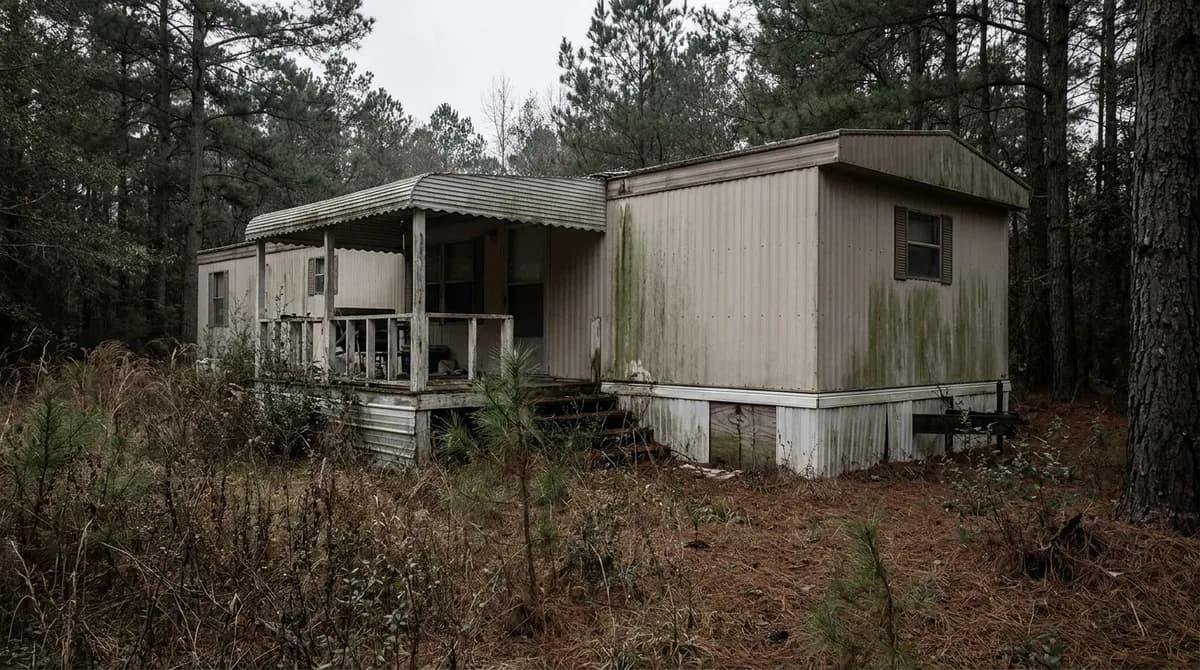
The property cannot be financed, so the buyer pool is already cash-only. A lot with no septic approval, a failing system, no legal access, or an older mobile home that no lender will lend against is not going to attract a mortgage buyer regardless of how it is marketed. Listing it does not widen the pool, it just makes you wait longer to reach the same buyers.
There is a title problem between you and a closing. An untransferred mobile home title, an unreleased lien on a loan paid off years ago, or probate that was never finished. These are solvable, but they are solvable on a schedule nobody controls. A cash buyer who has worked through them before can start the clock while the paperwork catches up. A retail buyer with a rate lock cannot.
Multiple heirs, spread out, who mostly want it over. This comes up constantly on inherited property in Burke and Lincoln County. Coordinating showings, repairs and price reductions across four people in three states is its own job.
Carrying cost is eating the difference. Property taxes, insurance, mowing, and on a still-titled mobile home the annual county location permit, which will not be issued until the ad valorem taxes on the home are paid. Twelve months of carry on a property that was never going to fetch a premium can erase the gap entirely.
You need a date certain. A closing date you can plan a move around has real value, and it is worth paying something for.
When listing genuinely wins, and you should push us on this
The lot is clean and buildable. Road frontage, decent access, a septic approval or soil that will clearly support one, and no title cloud. That is a lot somebody can put a USDA, VA or FHA financed home on, and that widens the buyer pool enormously. Competition is worth more than convenience on a property like that.
You are in a deep demand pocket. Columbia County around Evans, Grovetown and Harlem is a different market from the same acreage forty minutes further out. Where there are more buyers, an open listing captures more of them.
Time is not costing you much. If the taxes are low, nothing is deteriorating and nobody needs the money by a date, waiting is cheap, and waiting is what an MLS listing asks of you.
The property shows well. Cleared, mowed, photographable, with something to see. Land that looks like something sells on emotion. Land that looks like a wall of scrub sells on math.
If your property is in that column, we will tell you, and we would rather list it than buy it. It is a worse outcome for us as buyers and a better one for you.
The comparison nobody makes you do
Do not compare the cash offer to the list price. Compare two net numbers.
Listing net: likely sale price, minus the brokerage fee you negotiate, minus your share of closing costs, minus any price reduction or concession you end up making, minus carrying cost for the months it takes. Then apply the honest probability that it sells at all in that window.
Cash net: the offer, minus your closing costs, on a known date.
One thing to know about the brokerage side: since the National Association of Realtors practice changes took effect on August 17, 2024, offers of compensation to buyer brokers can no longer be made on the MLS, and written agreements must conspicuously disclose that compensation is negotiable and not set by law. Georgia has never set or capped commission rates. Whatever number you hear is a number you can talk about.
Ask for both figures in writing, from us or from anyone else. A seller who has two net numbers on one page makes a good decision almost every time.
Three Georgia specifics worth knowing before you sign anything
A lawyer is in your deal either way. The Supreme Court of Georgia held in In re UPL Advisory Opinion 2003-2 that closing a real estate transaction in Georgia is the practice of law. That attorney runs title and prepares the deed, and they work regardless of who is buying. If a cash buyer suggests you can skip the attorney, that is not efficiency, that is a reason to stop.
"As is" is not a shield against concealment. Georgia has no statute requiring a residential seller's disclosure form, and the form most people have seen is a Georgia REALTORS contract document rather than a legal mandate. Georgia does provide statutory safe harbors for certain facts under O.C.G.A. 44-1-16, but that section expressly preserves liability where there is a finding of fraud. Actively hiding a known failing septic system is not selling as-is. Disclose it. It almost never costs as much as people fear.
Transfer tax is small and predictable. Georgia's real estate transfer tax runs "$1 for the first $1,000 or fractional part of $1,000 and at the rate of 10 cents for each additional $100," filed through the state's PT-61 system. Worth putting in your net math, not worth worrying about.
Where being licensed changes our obligations, not just our options
Georgia's real estate license law is specific about a licensee who is buying for their own account. Under O.C.G.A. 43-40-25(b)(9), acting "in the dual capacity of agent and undisclosed principal in any transaction" is an unfair trade practice, and the Georgia Real Estate Commission's rules require a licensee acting as principal to disclose that position and put a clause to that effect in the contract.
So when we make you a cash offer, you find out in writing that the people buying your property hold Georgia real estate licenses, and it goes in the contract. An unlicensed cash buyer has no equivalent duty to you. That is worth knowing about the whole category, not just about us.
How to get a straight answer out of us
Send the address and whatever you know. We will look at zoning, access, the septic situation, whether the home on it is titled or converted, and what comparable property has actually done. Then you get two numbers: what we will pay, and what we think it lists and nets for.
Sometimes those are close and the cash offer is clearly the better deal. Sometimes the listing number is enough higher that we tell you to list it. Start on our sell page, or call or text 706-222-3403.
This article is general information about Georgia real estate practice and is not legal, tax or brokerage advice, and it is not an offer on any specific property. Values, market conditions and rules change. Consult a Georgia real estate attorney about your particular situation.
Sources: In re UPL Advisory Opinion 2003-2, 277 Ga. 472 (2003); O.C.G.A. 43-40-25, unfair trade practices; Georgia Real Estate Commission, Licensee Owned Properties; O.C.G.A. 44-1-16, disclosure safe harbors; Georgia DOR, Real Estate Transfer Tax; NAR settlement FAQs