"Turnkey" is used loosely enough to be almost meaningless. Ask three builders what it includes and you get three answers, and the differences are not small.
So here is ours: every line that goes into putting a new manufactured home on a developed acre in the CSRA, and which ones swing.
1. The lot, and whether anybody has proved it works
A "buildable lot" and a lot that has been proved buildable are different products at different prices.
A lot that has cleared zoning review, has a septic construction permit or at least a favorable soil evaluation, has legal access and a driveway permit, and has a known distance to power is worth more than the same dirt with none of that done. Most of what separates cheap raw acreage from a developed home site is paperwork and risk somebody already absorbed. It is the biggest single reason two lots that look identical from the road carry different numbers.
2. Clearing and grading
The pad has to be flat, compacted, at the right elevation relative to the septic field and the road, and pitched so water runs away from the home rather than under it.
The variable is topography and trees. A gently sloping pasture lot needs a fraction of the work a wooded lot on a grade needs, and fill dirt is a real line item when a lot sits low. Georgia's septic manual also excludes fill areas unless specially studied and certified, so the cheap fix is not always available.
3. Driveway and access
You need a driveway with a culvert where it meets the county road, and in most of our counties that is its own permit. McDuffie is explicit: "no mobile home permit can be issued until the driveway permit is approved by the county road department." Small line item, holds up everything behind it.
4. Septic
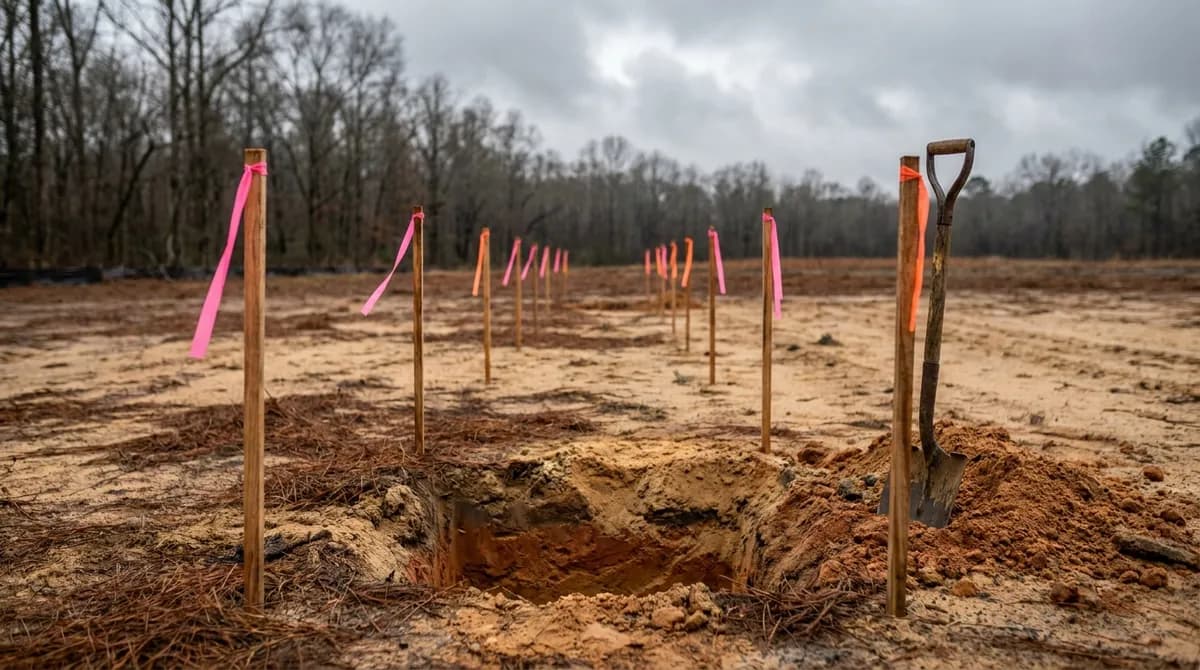
The big one, and we cover it in depth in a separate article. In short: the county health department issues a construction permit only after a site inspection with favorable findings on absorption rates, soil, groundwater and rock. No backfill and no use until a final inspection and written approval. The permit is good for twelve months.
What moves the cost is the soil. A conventional system on good soil is a known quantity. A lot needing a certified soil classifier, or an engineered system, is a different budget and a longer calendar.
5. Water: well or county line
County water means a tap fee and a service line from the main to the home, and the cost scales with distance. Georgia's rules also require connecting to a public or community sewage system if one is available within 200 feet of the property line, and if you are on public water, the septic permit will not issue until that water system is approved first.
A well means a drilling contractor licensed through Georgia EPD, a pump, a pressure tank and electrical, and the depth is not knowable in advance. It is the single least predictable number in this list. Georgia's septic rules also keep the absorption field at least 100 feet from any existing or proposed well, which on a small lot constrains where both can go.
6. The power drop
Out in rural Burke, Richmond, Columbia and McDuffie counties the utility is usually not Georgia Power. It is Jefferson Energy Cooperative, a member-owned co-op headquartered in Wrens serving eleven counties across this region. Out toward Lincolnton it is Rayle EMC or Georgia Power.
What matters for your budget is distance. A pole at the road is one number. A service extension several hundred feet back a wooded lot is another, and the utility sets that, not us.
One small thing that delays more closings than it should: the county will not release power until the street address is posted at the driveway. Not on the house. At the driveway, visible from both directions.
7. Permanent foundation and set
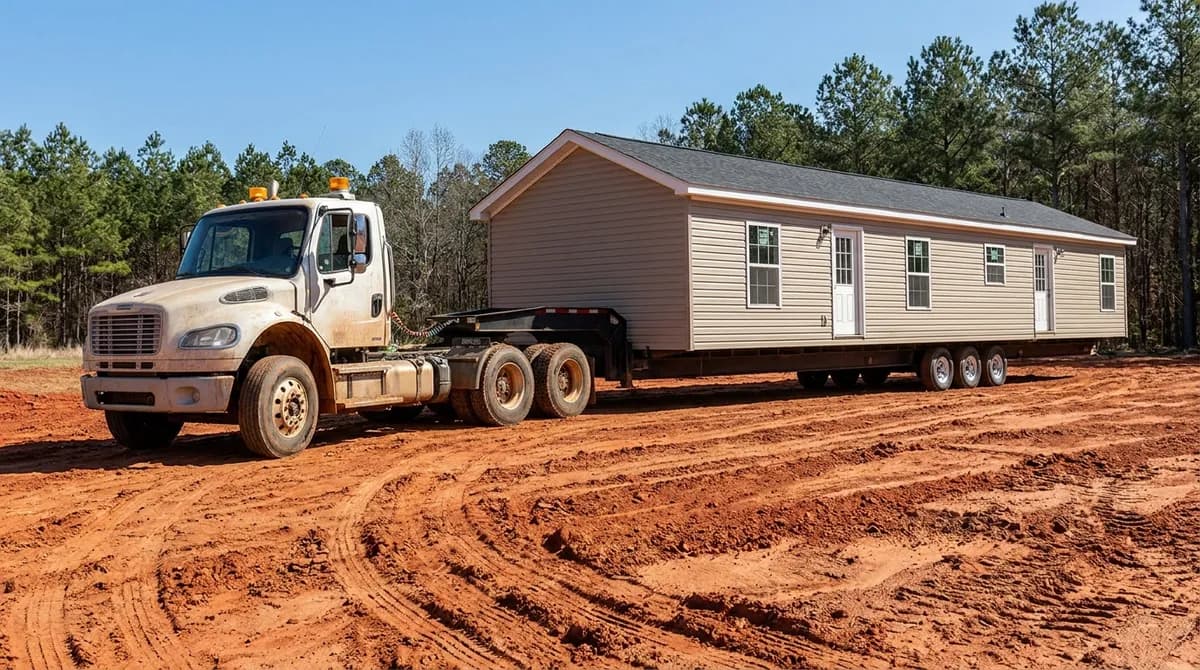
The home arrives in sections and gets set by a Georgia-licensed installer who has pulled an installation permit from the Safety Fire Commissioner's Manufactured Housing Section.
The foundation is where financing lives or dies. Georgia's own minimum footing depth is measured in inches, but HUD's Permanent Foundations Guide for Manufactured Housing requires reinforced concrete footings below the frost-penetration depth on HUD's map, mechanical anchorage rather than screw-in soil anchors, and a continuous perimeter enclosure. We build to the stricter standard because that is what keeps FHA and USDA financing available.
Multi-section homes also need the marriage line properly joined and sealed, plus a contractor certification that the home sustained no transport or set-up damage.
8. Skirting, and why the county matters
The perimeter enclosure is not decoration. HUD requires "a continuous wall that is adequately secured to the perimeter of the unit" allowing proper crawl space ventilation, with skirting permanently affixed to both home and foundation.
Local rules differ in ways that hit the budget directly. McDuffie County requires masonry skirting on a private lot and permits vinyl only for units in an approved mobile home park. Same home, different county, different number.
9. Steps, landings and the punch list
Every exterior door needs a code-compliant landing. Lincoln County writes that into its ordinance explicitly, along with appearance standards covering eave overhang, enclosed gables, roof pitch and permitted siding and roofing materials. Burke County adds a $1,000 guarantee of condition bond, refundable on final inspection and issuance of the certificate of occupancy, and withholds power approval until the home meets the county's structural and aesthetic standards.
10. Permits, inspections and the certificate of occupancy
A manufactured home in Burke County requires a county building permit "regardless of cost," and the building official cannot issue it until the applicant has the county health officer's written certification on sewage disposal. At the end, no certificate of occupancy issues until the health officer certifies the installation in writing. Burke's permit fee is not a flat figure; the county states it is value based, calculated from the home's fair market appraisal value.
11. Making it real property, and closing
A new home that was never titled goes into the county real estate records on a Certificate of Permanent Location with the manufacturer's certificate of origin attached, which makes home and land one parcel on one deed. Georgia is an attorney closing state, so a licensed closing attorney handles it either way.
So what does it cost?
We are not printing a per-line dollar table, because the site drives it and the site is different every time.
What we can tell you is what our finished packages have actually been listed at. As of this writing, the one-acre Burke County home sites we list run in the 200s, and the larger two-plus-acre sites in Columbia and McDuffie run into the low 300s, with current inventory and pricing on our buy page and our homes page. Those figures move, and our site says so.
The variables that move a package most, roughly in order: how far the power line is from where the home will sit; whether the lot is on county water or needs a well, and how deep that well ends up; how much fill and grading the pad needs; whether the soil takes a conventional septic system or an engineered one; which county you are in, because skirting, bonds and permit structures differ; and last, the plan itself.
That last one surprises people every time. The difference between two floor plans is often less than the difference between two lots.
And the calendar
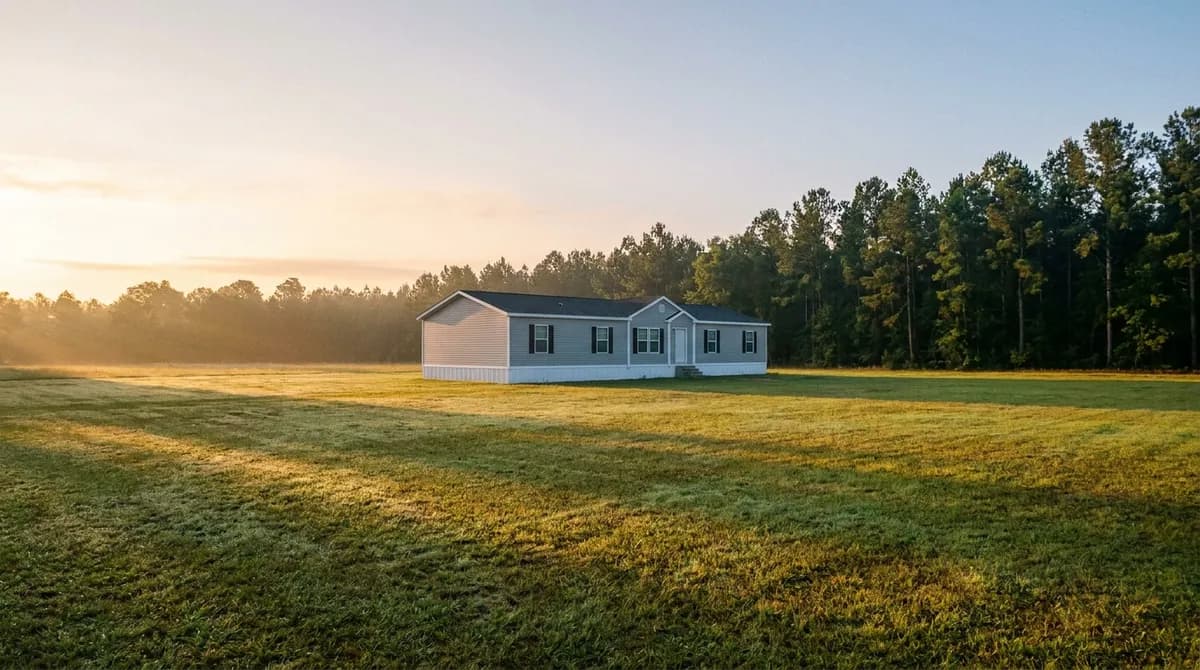
Our published estimate for many packages is approximately two to four months, which lines up with a 30 to 90 day build cycle plus the permitting in front of it. What determines whether you land at the front or the back of that window is almost always the septic permit and the utility, not the factory. Which is why, when we list a home site, most of that work is already done.
This article describes our general process and published pricing ranges at the time of writing. It is not a quote, an offer, or a guarantee of availability, price or timeline. Site conditions, county requirements, utility costs and manufacturer pricing change. Ask us for a written scope and price on a specific lot.
Sources: Ga. Comp. R. & Regs. 511-3-1-.03; Burke County LDC; McDuffie County Mobile Home Procedures; Georgia Safety Fire Commissioner, Manufactured Housing; Jefferson Energy Cooperative service area