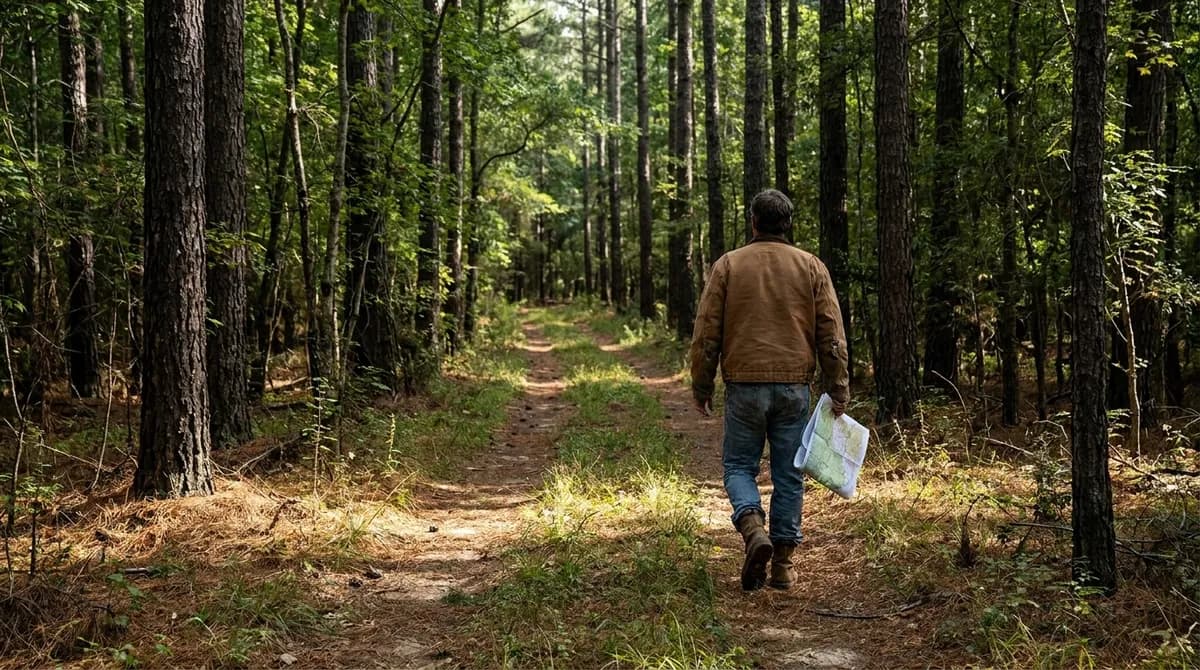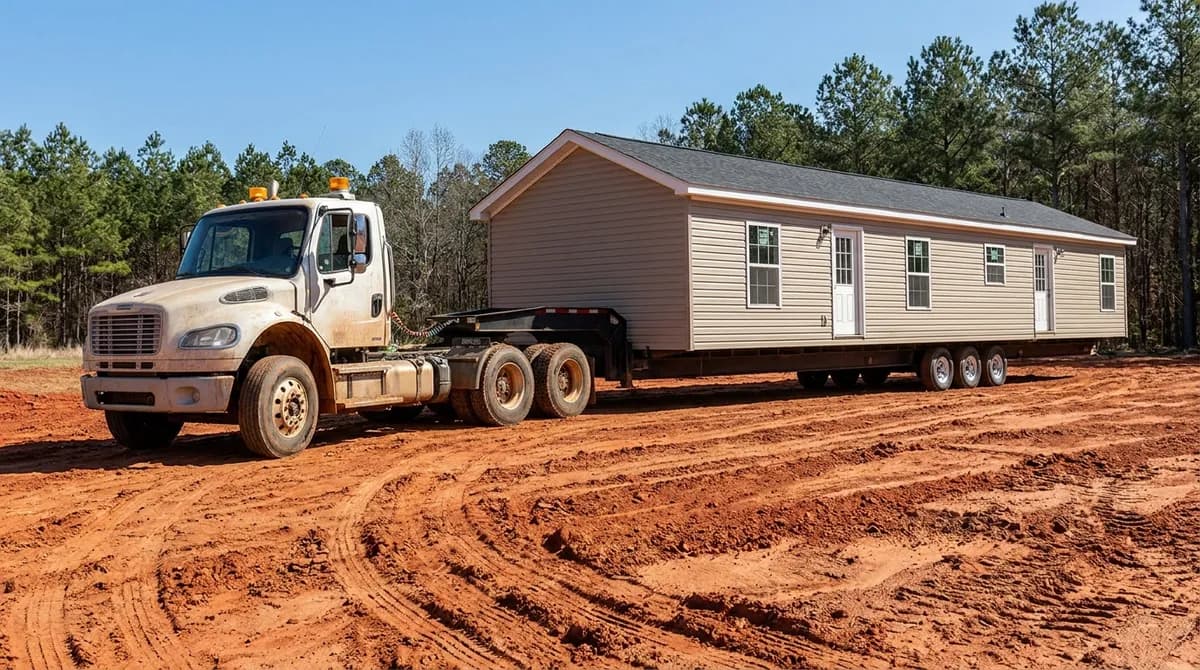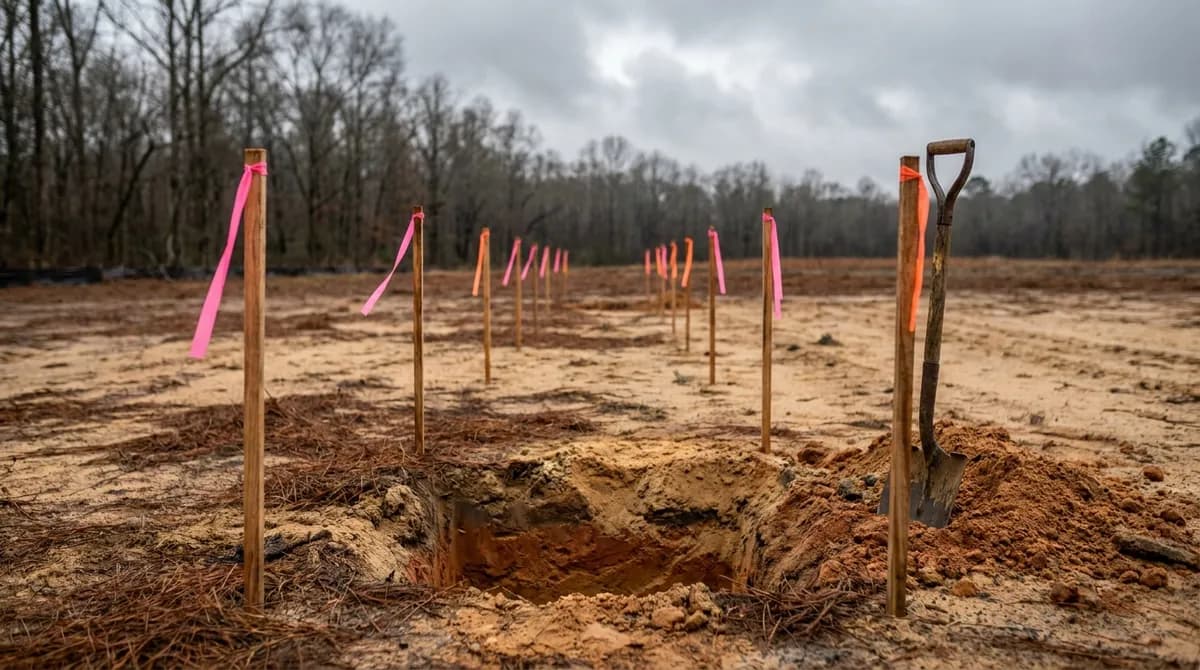
People assume the home is the long lead item. Order the house, wait for the factory, set it, move in.
On a Burke County lot the bottleneck is usually a hole in the ground. Until the health department signs off on how the sewage will be handled, the county will not issue a building permit, the home cannot be set, and your 30 to 90 day timeline means nothing.
Who issues it (and who does not)
In Georgia the septic permit does not come from the state and it does not come from the county government. It comes from the county health department.
Georgia Rule 511-3-1-.03(2) is direct: "No person may begin the physical development of a lot or structure where an on-site sewage management system will be utilized, nor install an on-site sewage management system or component thereof, without having first obtained from the County Health Department a construction permit."
For our area that is Burke County Environmental Health, at the Burke County Health Department on Dogwood Drive in Waynesboro, 706-554-3456, operating under the East Central Health District (District 6, Augusta), which also covers Richmond, Columbia, McDuffie and Lincoln.
Read that rule again, because there is a phrase people skip: no physical development of the lot before the permit. Not just no septic installation. Grading a pad early is not a shortcut, it disturbs the exact soil profile the inspector needs to read.
It is not really a "perc test"
Georgia's actual process is a site evaluation and a soil investigation, and a percolation test is only one possible part. Rule 511-3-1-.07(1) says soil characteristics and related data, "including percolation tests, may be required by the County Board of Health." May. On a lot with clean soil the county may never run one.
What always happens is the soil work. For a single-family lot the county's own environmental health specialist, holding a Level II inspector certification, can do it himself. The state manual's protocol calls for a minimum of three borings in the proposed absorption field and in the reserve field, to a minimum of 72 inches or to refusal, with a written report of expected percolation rate, depth to seasonal high water table, and depth of any refusal layer.
The permit issues only after that inspection: construction permits "shall be issued only after a site inspection by the County Board of Health shows favorable findings relative to absorption rates, soil characteristics, groundwater, rock, and any other factors which would affect the acceptability of the lot."
What makes a lot fail
Three thresholds in the state manual do most of the killing, and none are visible from the road.
Water. A permit is denied where the seasonal high groundwater table is less than two feet below the bottom of the proposed absorption field (one foot with Class I aerobic pretreatment). "Seasonal high" is the key phrase. A lot that is bone dry in September can be disqualified by what the soil profile says happens in March.
Rock. Same two-foot rule for bedrock or other impervious strata.
Slope. Ground over 25 percent slope is considered unsuitable unless a special investigation by a soil classifier shows the limitation can be overcome.
Fill areas are excluded unless specially studied and certified, which matters if somebody has been dumping dirt on a low corner to make it look buildable.
When a private soil classifier gets pulled in, and why it costs you weeks
Most single lots never need one. The state manual sends the job to an outside professional when the county hits something questionable: a seasonal high water table within 30 inches of the original ground surface, restrictive horizons or poor percolation within 24 inches of the planned trench bottom, slopes over 25 percent, or any case where a Level 3 soil survey is required.
Here is the part nobody warns you about. Georgia publishes a statewide list of individuals approved to conduct soil investigations, grouped by region. The Region 6 (Augusta) grouping is short. Very short. When a lot gets referred out you are not waiting on paperwork, you are waiting on a small number of people with calendars. That is why we would rather find the problem on a lot before we buy it than after we have sold it.
The clock, honestly stated
The one published deadline is a good one: "The County Board of Health shall approve or disapprove such application within twenty days after the receipt of a completed application."
One word in there does all the work. Completed. The clock starts when the file is complete, and an application missing a site plan, a bedroom count or a water supply answer is not complete. Once issued, the permit "shall remain valid for not more than twelve months from the date of issue," so there is a real expiration on the other end too.
Neither Burke County nor the health district publishes a local turnaround time or a septic fee schedule. We are not going to invent one. Call 706-554-3456 and ask what they are running.
How it chains into the building permit and the power
This sequence makes or breaks a build schedule in Burke County, and it is written into the county's Land Development Code.
No building permit without health certification. Section 26-9.02.06(j) of the Burke County Land Development Code says the building official "shall not issue a building permit where the proposed building, structure or use involves on-site means of sewage disposal until the applicant shall have first obtained the written certification of the county health officer."
A manufactured home needs a county permit regardless of cost, per section 26-9.02.06(a). The county also requires a certified installer's license number, a certified electrician, tax registration, and a $1,000 guarantee of condition bond, refundable on final inspection and issuance of the certificate of occupancy.
No backfill or use without the final septic inspection. Rule 511-3-1-.03(4): "No person may backfill or use an on-site sewage management system until a final inspection has been made by the County Board of Health, and written approval has been issued."
No certificate of occupancy without the health officer's written approval of the installed system, under 26-9.02.06(d)(2). And no inspections and no power release until the address is physically posted at the driveway.
So: septic permit, building permit, set, septic final, health officer certification, certificate of occupancy, bond returned. Skip a link and you are not delayed by a day, you are delayed by a re-inspection cycle.
Lot size, and why one acre keeps showing up
Burke County's Table 4-A sets minimum lot area in three columns depending on your water and sewer situation. On individual well and septic, R-1 and R-2 both require one acre, and A-1 agricultural requires five acres. That is not arbitrary: the state's own recommended criteria for a single family dwelling, which the manual says applies to "manufactured or mobile homes, stick built homes, modular homes, etc.," put the minimum at one acre with an individual well and half an acre on public water.
Two more Burke rules worth knowing. Section 26-4.02.01(b): "No more than one single-family residence may be served by a septic tank." And subsection (k) lets the county health officer require a larger lot than the zoning minimum where site conditions call for it, and disapprove the lot outright "where extreme health hazards are indicated by site characteristics."
The reason we do this before we sell a lot
Every home site we list has already been through this. That is most of the work and the part nobody sees, which is exactly why some cheap raw acreage stays cheap.
If you already own land and want to know whether it will hold a home, that is the first thing we check, and the first thing we will tell you if the answer is no. Start on our home sites and packages, or send us the parcel.
This article is general information about Georgia and Burke County requirements as published at the time of writing. Rules, ordinances, fees and local practice change, and county boards of health have discretion this summary does not capture. Confirm current requirements with Burke County Environmental Health and the Planning Department.
Sources: Ga. Comp. R. & Regs. 511-3-1-.03; Georgia DPH On-Site Sewage program; DPH approved soil investigation list; Burke County LDC Article IX; Burke County LDC Article IV; Burke County Permits and Inspections