People almost always start in the same place: a floor plan they like. That is the fun part, and it is the wrong first step.
If you own acreage in the CSRA there is a specific order to this, and getting it wrong turns a three month project into a nine month one.
Step zero: figure out which county you are in
This sounds insulting until you have watched it go wrong.
Hephzibah is a city in Richmond County. It kept its own charter when Augusta and Richmond County consolidated in 1996, along with Blythe. But the Hephzibah 30815 ZIP code spills over into Burke County, so a "Hephzibah, GA" mailing address can sit inside Hephzibah city limits, in unincorporated Richmond County, or in Burke County. Three sets of rules, three zoning ordinances, three tax offices, and, as we found running USDA's eligibility map, sometimes two different answers on whether a mortgage program will lend there at all.
Your mailing address is not a jurisdiction. Pull your parcel on the county GIS or tax assessor site and confirm which county and municipality you are in first.
Step one: zoning, and it is county-specific in ways that surprise people
This step stops projects, and each county handles it differently.
Burke County. The Land Development Code allows single-family detached dwellings "including manufactured homes" in the rural districts, then says something blunt about the residential ones: "Conventional built dwellings shall be required in residential zoning districts, with the exception that only manufactured homes shall be allowed in the R-4 district." Section 26-4.03.22 fills it in: manufactured homes are permissible in A-1, and in R-4 for single-lot development, with site design standards referencing the R-1 minimums for land area, width and frontage. So in Burke the question is whether your parcel is A-1 or R-4.
Augusta and unincorporated Richmond County. Augusta's FAQ is refreshingly plain: the property must be "correctly zoned for placement of a manufactured home (A – Agriculture or R-MH - Manufactured Home Residential)," and you obtain a Manufactured Home Permit by bringing "a plat of the land or the location of the home in an approved Manufactured Home Park, the size, make, and year of the home and $75." On older homes: "Augusta does not regulate manufactured homes by age in relation to zoning."
Lincoln County regulates appearance rather than location, applying design standards to single-family dwellings that cover boxed eaves with a minimum overhang, enclosed gables, minimum roof pitch, permitted siding and roofing materials, removal of towing devices and axles, and a landing at every exterior door.
McDuffie County gates the permit behind a checklist. Per the Planning Commission's Mobile Home Procedures you need a driveway (pipe) permit from the County Road Department first, and "no mobile home permit can be issued until the driveway permit is approved." Then a tap receipt or health department septic approval, a mobile home decal receipt, and a complete surveyed plat with the surveyor's stamp. The county "will not accept a section of a plat, real estate office information sheet, surveyor's field drawings, etc."
Columbia County is the most regulated of the five, with a long list of districts plus town center, node and corridor protection overlays. Verify your district and any overlay with the planning office.
The shorthand we use internally: Burke restricts where, Lincoln restricts what it looks like, McDuffie restricts how you finish it, Columbia restricts the most.
Step two: soil, before you move a single bucket of dirt
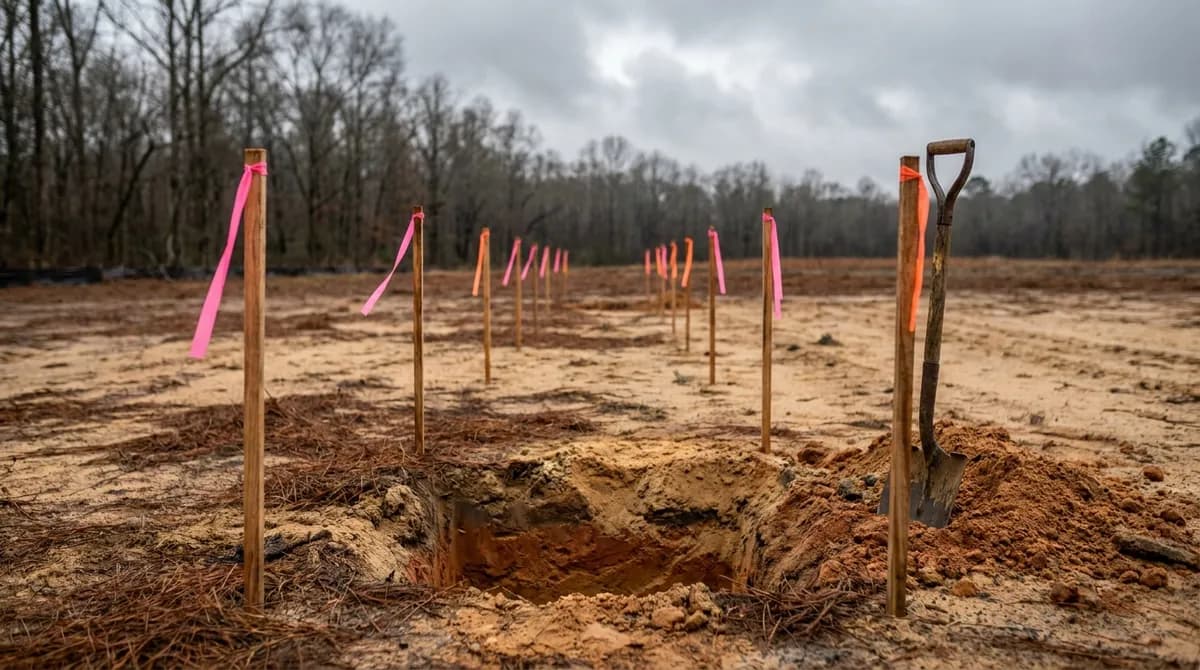
Georgia's on-site sewage rule says no person may begin "the physical development of a lot or structure where an on-site sewage management system will be utilized" before obtaining the construction permit from the county health department.
That is not a formality. Grading the pad first disturbs the exact soil profile the inspector needs to read, and the state manual says that where cuts change the vertical position of the absorption field, the soil evaluation and percolation testing have to be done after the alterations. Clearing early can convert an easy approval into a referral to a soil classifier.
So apply first, let the county do its site evaluation and borings, get the permit, then start work. The county has twenty days to act on a completed application, and the permit stays valid up to twelve months.
Step three: pin down the utilities in writing
The power drop. Most rural land in Burke, Richmond, Columbia and McDuffie is served by Jefferson Energy Cooperative rather than Georgia Power; out toward Lincolnton it is Rayle EMC or Georgia Power. Distance from the existing line drives the cost, and the utility sets it.
Water. If a public system is available you may be required to connect rather than drill, and in McDuffie that applies if utilities reach "any part of your lot or land (even if it is located across the road)." On a well, depth is unknowable in advance, and the septic absorption field has to stay 100 feet from it.
Step four: financing, which shapes what you can buy
Owning the land already is usually a strength, because the equity can do work. But one rule catches people repeatedly.
If you are thinking about a used home for your land, FHA requires the home to have "been directly transported from the manufacturer or the dealership to the site." Not moved only once. Factory or dealer lot, directly to this parcel. A home that was set up somewhere and later relocated is off the table for FHA regardless of the foundation under it. Fannie Mae has a parallel rule and also requires at least 12 feet of width, so a single-wide is out for conventional. USDA will not guarantee a loan used "to purchase a site without also financing a new unit."
Our financing page lays out how the four programs differ. Read it before deciding new or used.
Step five: pick the plan to fit the lot
Now the fun part, and now it is an informed decision. Width decides deliverability and pad size. Bedroom count is an input to how the septic system is sized, so a flex room marketed as a fifth bedroom is not free. Length and width drive the grading, footing count and utility runs. We go through this on our floor plans page; the honest version is that the lot narrows the list before your taste does.
Step six: permits, set, inspections, power
The chain, in Burke County terms: septic permit, then the county building permit (which the building official cannot issue without the health officer's written sewage certification), then the set by a Georgia-licensed installer working under an installation permit from the Safety Fire Commissioner, then inspections, then the health officer's written approval of the installed system, then the certificate of occupancy.
Two small things that delay more projects than anything technical: post the address at the driveway, because power will not be released without it, and do not skirt the home until the inspector tells you to. McDuffie says that in capital letters, and charges a re-inspection fee.
Step seven: make it real property
A new home that has never been titled goes into the county real estate records with the manufacturer's certificate of origin attached, which merges it into the parcel. That is what makes it one property, on one deed, financeable with one mortgage.
The four mistakes we see most
Grading the pad before the septic permit. Buying a used home that has already been set somewhere, then discovering the financing rules. Ordering a 32-wide for a lot the transport crew cannot get it into. And assuming a mailing address tells you which county's rules apply.
If you own land in the CSRA and want to know what it will actually support, that is the conversation to have first. We would rather tell you a lot will not work than sell you a home that cannot go on it. Send us the parcel and we will start with the zoning and the soil.
This article is general information about county and state requirements as published at the time of writing. Ordinances, fees, procedure documents and local practice change, and several county documents referenced here carry older revision dates. Confirm current requirements with your county planning office and county environmental health office.
Sources: Burke County LDC; Augusta manufactured home FAQ; McDuffie County Mobile Home Procedures; Lincoln County Code Chapter 34; Columbia County Zoning; Ga. Comp. R. & Regs. 511-3-1-.03